
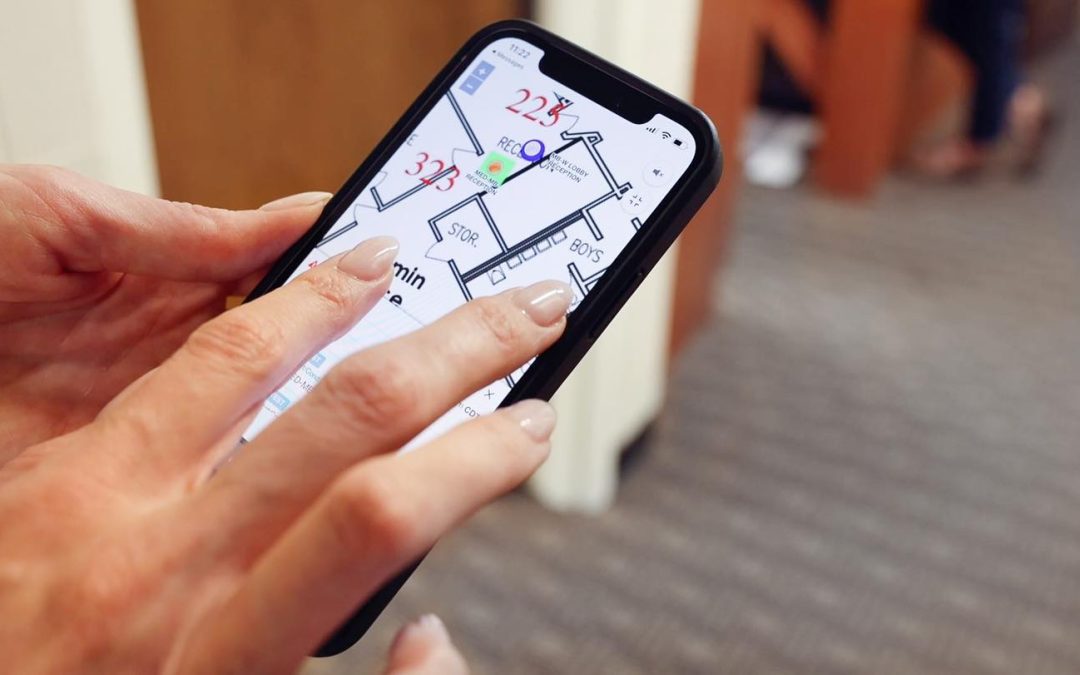
As emergency response grows more complex — spanning physical threats, cyber incidents, severe weather, medical emergencies, and infrastructure failures — federal funding priorities are shifting toward integrated emergency management platforms that improve coordination, communication, and response speed.
Across government, education, healthcare, nonprofits, and critical infrastructure, grant programs increasingly support technologies that centralize alerts, automate workflows, and enable rapid on-site response. This is exactly where modern emergency management platforms — like those provided by BluePoint Alert — play a critical role.
Below is a focused look at current federal and state grant programs that directly align with emergency notification, response coordination, and deployable response infrastructure, including BluePoint Alert’s Compact Response Unit (CRU).
Emergency Management Performance Grant (EMPG)
Best fit for: Emergency management platforms, alerting systems, coordination tools
Eligible recipients: State, local, tribal, and territorial agencies
The EMPG program remains one of the most applicable funding sources for emergency management software platforms. EMPG funding supports:
- Emergency operations center (EOC) capabilities
- Incident coordination and communications
- Emergency notification and alerting systems
- Training, exercises, and response readiness tools
Because EMPG is designed to strengthen day-to-day emergency management functions, platforms like BluePoint Alert — which centralize incident activation, notifications, and response workflows — align directly with allowable use cases.
Key advantage: EMPG funds can support both technology adoption and operational readiness, making it ideal for platforms that integrate software, hardware, and response procedures.
Homeland Security Grant Program (HSGP)
Best fit for: Mass notification, situational awareness, multi-agency coordination
HSGP funding prioritizes solutions that enhance preparedness, response, and recovery across jurisdictions. This includes:
- Threat detection and response coordination
- Multi-agency communication platforms
- Incident command and situational awareness tools
- Physical security enhancements tied to response workflows
Emergency management platforms that provide real-time alerts, role-based notifications, and escalation protocols are increasingly seen as foundational infrastructure — not optional add-ons.
For facilities and agencies deploying Compact Response Units (CRUs), HSGP funding can support the integration of on-site response hardware with digital command and notification platforms like BluePoint’s Command and Control (C2).
Nonprofit Security Grant Program (NSGP)
Best fit for: Emergency alerting, lockdown activation, staff response coordination
Eligible recipients: Nonprofits at high risk of targeted attacks
NSGP funding has expanded beyond cameras and access control to include emergency communication and response systems. Eligible investments often include:
- Mass notification platforms
- Panic and duress alerting
- Emergency response equipment
- Integrated software-hardware safety systems
For nonprofits, schools, houses of worship, and community centers, platforms like BluePoint Alert provide a single system for alerting staff, initiating response, and coordinating with first responders — all critical outcomes emphasized in NSGP scoring.
Healthcare Preparedness & Public Health Grants
Best fit for: Medical emergency coordination, facility-wide alerts, response standardization
Healthcare-focused grants at the federal and state level increasingly support:
- Facility-wide emergency notification
- Incident command integration
- Rapid response workflows for medical emergencies
- Continuity of operations planning
Emergency management platforms that integrate alerts, response roles, and physical response assets — such as CRUs placed throughout a facility — help healthcare organizations meet preparedness benchmarks while improving real-world outcomes.
State & Local Cybersecurity and Infrastructure Resilience Grants
Best fit for: Secure, centralized emergency platforms
As cybersecurity threats increasingly impact emergency communications, grants now emphasize:
- Secure alerting infrastructure
- Redundancy and resilience in emergency platforms
- Platforms that reduce dependency on fragmented systems
Cloud-based emergency management platforms with built-in redundancy, role-based access, and rapid activation capabilities align well with these requirements.
Spotlight: The Compact Response Unit (CRU) and Grant-Funded Readiness
The Compact Response Unit (CRU) represents a growing category of grant-eligible emergency response infrastructure — combining physical readiness with digital coordination.
CRUs are designed to:
- Provide immediate, interactive communication
- Standardize on-site response across facilities
- Integrate directly with emergency management platforms like C2
- Support faster, safer response before first responders arrive
From an evaluator’s perspective, CRUs demonstrate:
- Tangible preparedness investments
- Clear response protocols
- Measurable improvements in response time and coordination
When paired with an emergency management platform like BluePoint Alert, CRUs help organizations show end-to-end readiness — from alert activation to physical response — which is increasingly favored in grant scoring.
Why Emergency Management Platforms Are Winning Grant Support
Grant reviewers are prioritizing solutions that:
- Reduce response time
- Improve coordination
- Standardize emergency procedures
- Scale across facilities and jurisdictions
- Demonstrate real-world impact
Platforms that integrate alerts, workflows, and physical response assets — rather than siloed point solutions — best meet these criteria.
How to Position Your Grant Application for Success
To improve approval odds:
- Tie technology directly to response outcomes, not features
- Highlight integration (software + hardware + procedures)
- Reference incident command compatibility
- Demonstrate how tools like CRUs improve immediate response
- Include training, exercises, and sustainability planning
Federal and state funding is increasingly aligned with modern, integrated emergency management platforms — systems that go beyond notifications and actively support response.
Whether through EMPG, HSGP, NSGP, or healthcare preparedness programs, organizations deploying platforms like BluePoint Alert and Compact Response Units (CRUs) are well positioned to secure funding while building safer, more resilient environments.